It happens fast. One moment everything is normal, the next your dog has gulped down a sock or your cat has decided a ribbon looks delicious. Foreign object ingestion is one of the most common emergencies veterinarians see, and knowing what to do in those first moments can make a critical difference.
At State Street Veterinary Hospital, we help Boise pet owners navigate these situations every day. If you suspect your pet swallowed something they shouldn’t, here’s how to respond quickly and safely.
Step One: Stay Calm and Stop Further Access
Your pet takes cues from you. Panicking can make them anxious and harder to handle. Take a breath, then immediately remove any remaining objects from the area to prevent them from swallowing more.
If you know exactly what your pet ingested, try to remember:
- What the object was
- When it happened
- Approximately how large the item was
This information helps your veterinarian decide the safest next steps.
Do Not Induce Vomiting Unless Directed
It can be tempting to try home remedies, but never attempt to induce vomiting unless a veterinarian specifically instructs you to do so. Some objects can cause more damage coming back up than going down, especially sharp items, strings, bones, or chemicals.
Calling a veterinary professional first is always the safest move.
Signs That Require Immediate Veterinary Attention
Some pets show symptoms quickly, while others may seem fine at first. Contact a veterinarian right away if you notice:
- Vomiting or retching
- Lethargy or weakness
- Abdominal pain or bloating
- Drooling excessively
- Refusal to eat
- Difficulty defecating or straining
Even if symptoms appear mild, swallowed objects can shift or cause internal damage over time.
Why Swallowed Objects Are So Dangerous
Foreign objects can become lodged in the stomach or intestines, blocking the normal movement of food and fluids. This can lead to dehydration, tissue damage, infection, and in severe cases, life-threatening complications.
Items commonly ingested include:
- Socks, underwear, and fabric
- Toys or pieces of toys
- String, ribbon, and yarn
- Corn cobs, bones, and food packaging
Cats are especially vulnerable to linear objects like string, while dogs often swallow items during play or scavenging.
How Veterinarians Diagnose and Treat Ingestion
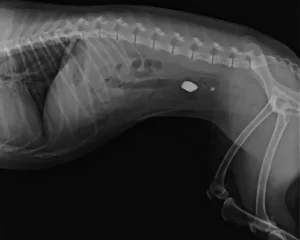
When you arrive at State Street Veterinary Hospital, your veterinarian may recommend X-rays, ultrasound, or other imaging to determine where the object is located and whether it can pass safely.
Treatment depends on the situation and may include:
- Monitoring and supportive care
- Inducing vomiting under medical supervision
- Endoscopic retrieval
- Surgical removal if the object is causing a blockage
Early intervention often means less invasive treatment and a faster recovery.
Preventing Future Incidents at Home
While accidents happen, prevention goes a long way. Consider these safety tips:
- Keep laundry, trash, and small objects out of reach
- Supervise pets with toys and discard damaged ones
- Choose pet-safe chews appropriate for your pet’s size
- Store string, rubber bands, and hair ties securely
A pet-proofed home reduces the risk of emergency visits and stress for everyone involved.
Trust Your Instincts and Call When in Doubt
If you think your pet swallowed something they shouldn’t, it’s always better to call sooner rather than wait. Prompt veterinary care can prevent complications and may even avoid surgery.
At State Street Veterinary Hospital, our team is here to support pets and their families throughout Boise and the surrounding communities. If you’re unsure what to do, give us a call. We’d rather answer questions early than see a pet later in pain.